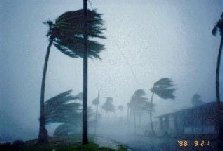
Primary personal account
Jim Leonard’s original biography
Jim’s retrospective describes his formative Miami experiences during Hurricanes Donna, Cleo and Betsy, his pursuit of severe weather, and his later years documenting storms around the world.
Contemporary newspaper profile · Home & Garden, page 1
“Chasing the Wild Wind for Thrills and Profit”
Nick Ravo’s March 11, 1992 New York Times profile introduces Jim in
Miami, documents his 1991 move to Guam, and places him within the
small community of early storm chasers.
National Hurricane Center oral history
Richard Pasch remembers Jim
Pasch describes Jim as a good friend and recalls their shared
interest in weather photography, providing direct context for Jim’s
relationship with National Hurricane Center meteorologists.
In one short exchange, Pasch recalls making Miami weather films with
his “good friend Jim Leonard,” including dust devils and
waterspouts.
Richard Pasch, NHC Q&A, April 2012
NOAA photographic record
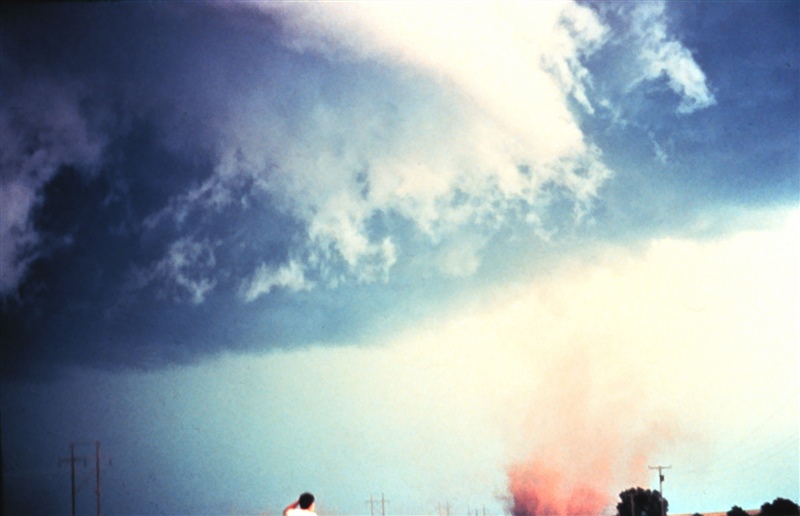
The 1975 anticyclonic tornado
NOAA and the National Severe Storms Laboratory preserve Jim’s photograph of an anticyclonic tornado west of Alva, Oklahoma, on June 6, 1975.
Book evidence · pages 146–147
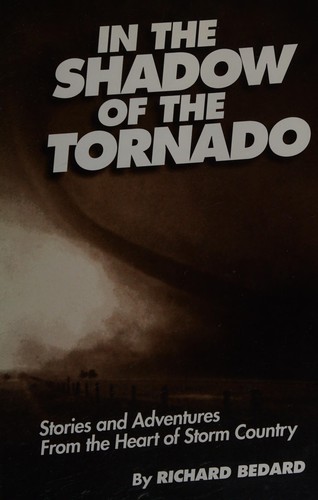
In the Shadow of the Tornado
Richard Bedard’s 1996 book profiles Jim’s close-range tornado
chasing on pages 146–147. The index confirms the entry on page
162.
“Jim Leonard lying flat across the rear seat. He has pursued
tornadoes since 1974.”
Richard Bedard, p. 147
Federal technical documentation · printed page 6
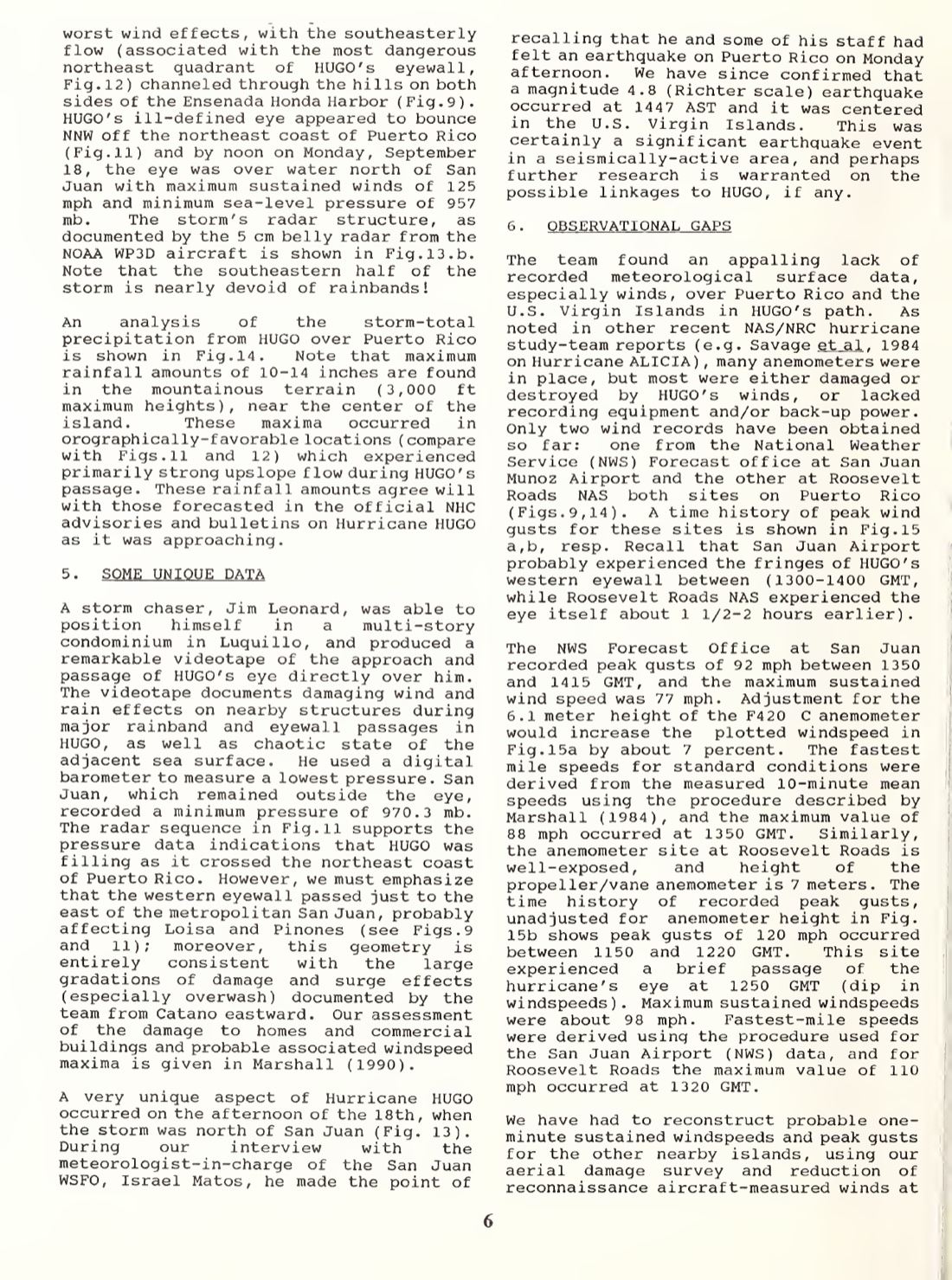
Hurricane Hugo in Puerto Rico
Joseph Golden’s federal report describes Jim’s Luquillo videotape,
the damaging eyewall conditions it recorded and his digital
barometer observation. The scientific chronology presents the
exact report page in the archive reader.
Firsthand interview · recorded 2015
Dr. Neil Frank remembers early chasers
Frank recalls Jim and other storm chasers gathering at the National Hurricane Center after storms to compare notes and play field audio. The Jim Leonard exchange begins at 10:14.
Firsthand account · archived January 7, 2009
Michael Laca on meeting and learning from Jim
Laca’s TropMet profile traces their friendship to a Hurricane Diana
videotape he bought in December 1984. It describes Jim bringing his
footage to Laca’s home, their first planned chase season, the 1985
Elena intercept with Richard Pasch and Jim’s continuing mentorship.
Contemporary websites · archived 2000–2005
Jim’s years as a storm-chasing guide
Archived Cloud 9 Tours and Cyclone Tours pages document Jim’s work
as a guide, forecaster and co-owner. The records connect him with
Charles Edwards, R. J. Evans, Keith Brown, Mike Theiss, Olivier
Staiger and Brad Riley, and preserve a May 27, 2000 tour intercept
near Windthorst, Texas.
University program · April 9, 2005
Hurricane Ivan presentation
The University of South Alabama’s SECAPS agenda lists Jim for a
30-minute public-session presentation on Hurricane Ivan and the 2004
hurricane season.
Firsthand mentorship account
Jim Edds on learning from Jim
Edds describes receiving practical positioning and safety guidance
from Jim during Hurricane Georges, and places their friendship
within a wider network of South Florida and Guam chasers.
Firsthand memorial · November 4, 2014
Roger Edwards remembers a mentor and innovator
Edwards traces a friendship that began at the National Severe
Storms Laboratory in 1986. His account records Jim sharing storm
films with researchers, adapting through successive generations of
video equipment, teaching hurricane forecasting and positioning,
and freely supporting scientific and public education.
Memorial fund announcement · 2015
Jim Leonard Memorial Meteorology Scholarship Fund
Jim Edds’s Extreme Storms site announced a fund through the
Mississippi State University Foundation for meteorology students
selected by the Department of Geosciences. The surviving page
preserves the fund’s stated purpose and original contribution
instructions.
University profile · 2011
Jim Edds on chasing Hurricane Georges with Jim
The University of West Florida’s profile of alumnus Jim Edds
records his 1998 Hurricane Georges chase with Jim Leonard. Edds
recalls Jim’s guidance on choosing a safe position and recognizing
the eye through changing winds—practical knowledge shared between
friends and chase partners.
Named memorial recollections · November 2014
Chasers remember Jim’s generosity
The Stormtrack memorial preserves named recollections of Jim as a
chase partner and mentor. Jason Persoff describes their shared
field work; another contributor records Jim copying and mailing
rare tornado footage so the recording would not disappear.
Chaser interview · January 2012
Jim’s influence reaches a younger generation
In a retrospective interview, Shane Adams identifies Jim as the
first storm chaser he seriously followed and a formative example
during his early years. The account documents influence beyond
Jim’s direct chase partners.
Contemporary storm-chasing publication · 1983
Films shared at a Norman gathering
Storm Track reported Jim Leonard and Barbara White showing
videotapes from the May 13 Estelline supercell at a gathering of
tornado chasers in Norman, Oklahoma.
Firsthand memorial recollections · 2014
Friends and chase partners remember Jim
Named recollections from Steve Wachholder, Mike Theiss and others
describe shared hurricanes, storm-film screenings, friendship and
Jim’s influence as a field mentor.
Moving-image catalog
Films, interviews and broadcasts
The archive’s searchable directory records surviving uploads,
broadcast appearances, oral histories and institutional exhibits.
Contemporary records and later archival research · 1935–1943
The early hurricane flights
Cuban and American reporting, the U.S. Weather Bureau’s 1943
account and later aviation research separate hurricane location,
meteorological penetration and operational reconnaissance.
Contemporary trade press · September 1926
Ralph Radnor Earle’s hurricane newsreel
A contemporary motion-picture trade report identifies Pathé
cameraman Ralph Radnor Earle with film made in the Great Miami
Hurricane disaster zone, an early documentary precursor to later
independent hurricane field work.
Oral history and field records · 1965–2018
Independent hurricane chasing becomes a network
Participant recollections and later interviews document an early
bridge from Terry Nixon and Richard Horodner to Jim Leonard, then
to a larger generation of meteorologists, camera operators and
field researchers.
International historical context
Cyclone observation beyond America
Official histories from the Philippines, India, Hong Kong and
Taiwan place modern chase culture beside older warning networks and
later Asian aircraft research.
University field research and education · 1998–today
When chasing becomes field science
Institutional records document hurricane instrument teams,
supervised student research, NOAA aviation pathways, Taiwan's
DOTSTAR typhoon program and related severe-storm courses.
Firsthand chase account · August 2004
Jim explains his Hurricane Charley positioning
Jim’s contemporaneous account describes recognizing Charley’s
north-northeast turn, abandoning an earlier Sarasota plan and
repositioning around Fort Myers and Port Charlotte. The account
complements the National Hurricane Center observer table that
preserves his 950.0-millibar reading.
Chaser interview · 2019
Jim’s videotapes inspire another chaser
Bill Reid recalls seeing storm-chasing VHS tapes by Jim Leonard and
Tim Marshall around 1990 or 1991. Reid identifies the recordings as
the experience that showed him serious storm chasing existed and
inspired him to pursue it himself.